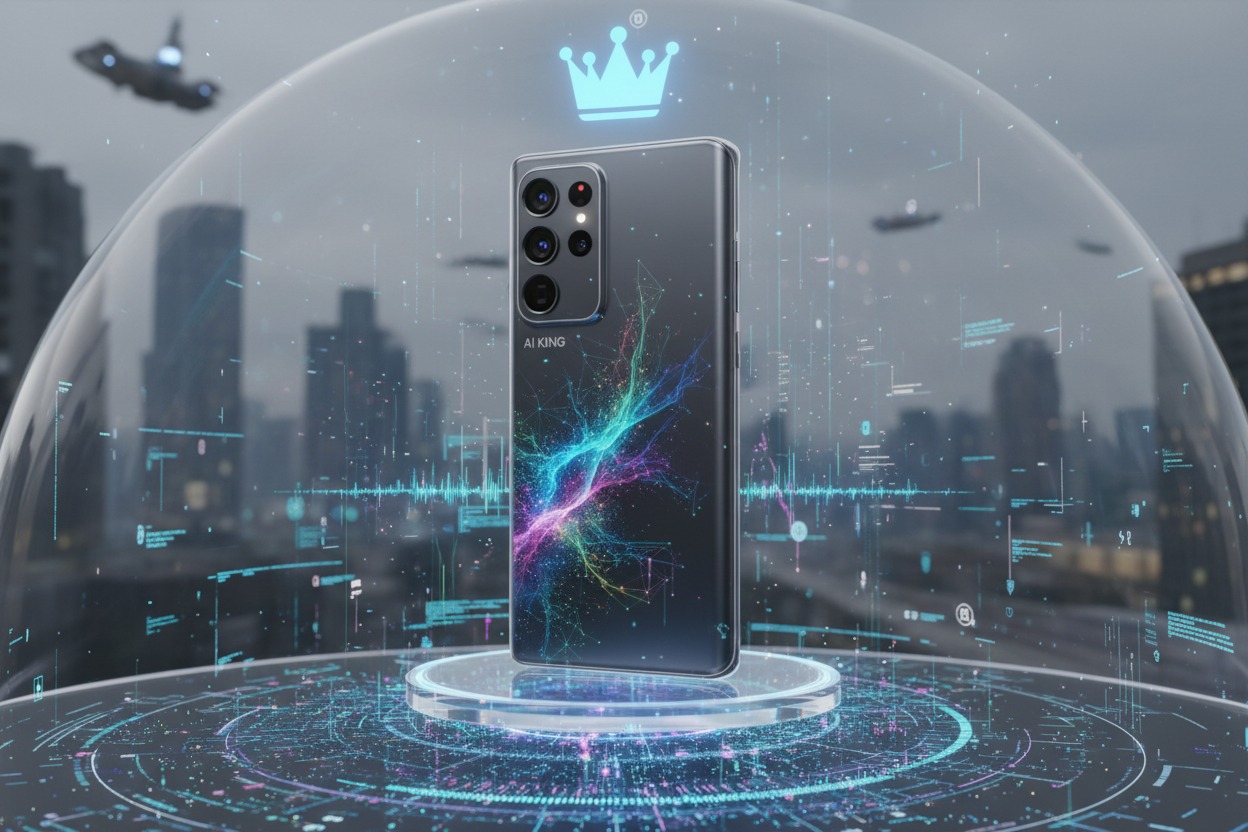
As the smartphone landscape increasingly shifts from hardware-focused battles to software-driven revolutions, Samsung has consistently positioned itself at the vanguard of mobile artificial intelligence. With the release of the Samsung Galaxy S26 Ultra, the tech giant aims to solidify its dominance in an era where silicon power is measured not just by raw speed, but by cognitive capability. While previous generations introduced us to the concept of "Galaxy AI," the S26 Ultra promises a paradigm shift, transforming the device from a passive assistant into an intuitive companion. But does this latest flagship truly deserve the crown, or is it merely riding the wave of marketing hype?
Next-Gen Galaxy AI: What Makes It So Smart?
At the heart of the Galaxy S26 Ultra’s cognitive prowess lies a custom-engineered neural processing unit (NPU) integrated into its next-generation chipset. Unlike its predecessors, which often relied heavily on cloud-based computation for complex tasks, the S26 Ultra processes a vast majority of its AI workloads locally on the device. This shift to on-device AI not only ensures lightning-fast response times but also drastically enhances user privacy, as sensitive personal data no longer needs to travel to external servers. From real-time voice translation to complex photo editing, the hardware works in seamless synergy with the software to make every interaction feel instantaneous.
The software experience has evolved from novelty features into indispensable daily tools. The upgraded "Galaxy AI" suite boasts an advanced contextual awareness engine that learns from your daily habits, communication style, and scheduling preferences. Live Translate now supports multi-dialect conversations with zero latency, even in offline mode, while the Note Assist feature can instantly synthesize hours of messy voice recordings into neatly formatted, action-oriented summaries. Furthermore, the camera system leverages deep-learning algorithms to predict shooting conditions, automatically adjusting exposure, focus, and even recommending compositional changes before you even press the shutter.
What truly sets the S26 Ultra apart is its multimodal capability, allowing the AI to understand and synthesize information across different formats simultaneously. For instance, you can point the camera at a foreign-language document, ask the AI to translate it verbally, and have it automatically draft a calendar invite based on the text—all within a single, continuous interaction. This level of cross-functional intelligence breaks down the barriers between isolated apps, creating a unified user experience that feels less like operating a smartphone and more like collaborating with a highly efficient personal assistant.
The Verdict: Is It Truly the Ultimate AI King?
To crown the Galaxy S26 Ultra as the ultimate AI king, we must look at how it fares against its fiercest rivals, namely Google’s Pixel series and Apple’s latest flagships. While Google pioneered many of the ambient computing concepts we see today, Samsung has successfully bridged the gap between pure software innovation and premium hardware integration. Apple, on the other hand, continues to take a more conservative, ecosystem-locked approach to its intelligence suite. The S26 Ultra manages to strike a near-perfect balance, offering a highly customizable and open AI experience that feels more mature, versatile, and globally accessible than what the competition currently offers.
However, being the king does not mean the S26 Ultra is without its minor flaws. The sheer abundance of AI features can occasionally feel overwhelming for users who prefer a more straightforward smartphone experience, requiring a bit of a learning curve to fully utilize. Additionally, running high-intensity AI models locally does put a noticeable strain on battery life during extended use, though Samsung’s thermal management and battery optimization do a commendable job of mitigating this. There is also the looming question of future monetization, as the industry continues to debate whether premium AI features will eventually require a subscription model—a hurdle that could alienate some consumers down the line.
Ultimately, the Samsung Galaxy S26 Ultra earns its title as the reigning champion of mobile AI because it delivers practical utility over gimmicks. It does not just offer AI for the sake of buzzwords; it integrates machine learning into the very fabric of the user interface to solve real-world problems. Whether you are a professional managing a chaotic workflow, a creative pushing the boundaries of mobile photography, or an everyday user looking for a seamless digital experience, the S26 Ultra adapts to your needs with unprecedented intelligence. It is a masterclass in how modern technology should serve the user, setting a remarkably high bar for the rest of the industry to follow.
In conclusion, the Samsung Galaxy S26 Ultra is more than just an incremental hardware update; it is a defining milestone in the evolution of the smart device. By seamlessly blending cutting-edge on-device processing with intuitive, multimodal software, Samsung has crafted a smartphone that genuinely anticipates and adapts to human behavior. While competitors will undoubtedly continue to push their own cognitive boundaries, the S26 Ultra currently sits undisputed on the throne. For anyone seeking the absolute pinnacle of mobile artificial intelligence, the search ends here.