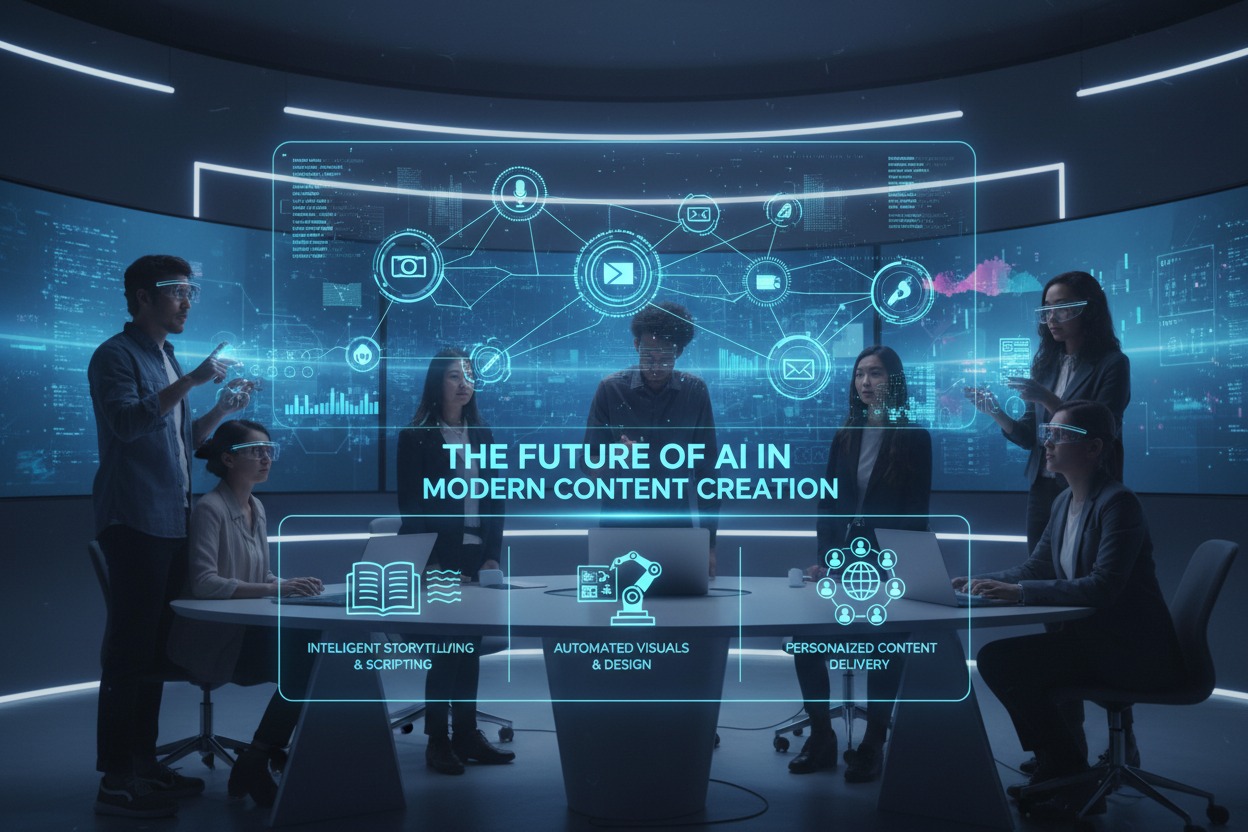
The landscape of content creation is undergoing a seismic shift, driven by the rapid evolution of artificial intelligence. Not long ago, the idea of a machine drafting a compelling article, crafting persuasive ad copy, or outlining a novel seemed like science fiction. Today, AI has transitioned from a futuristic novelty into an indispensable tool for writers, marketers, and creators worldwide. As we stand on the cusp of this new creative frontier, understanding how these technologies reshape our relationship with words is no longer optional—it is essential for anyone looking to navigate the future of digital expression.
The Rise of AI Writers: Transforming How We Tell Stories
In recent years, generative AI models have evolved from simple grammar checkers into sophisticated co-creators capable of mimicking diverse tones, styles, and structures. Tools powered by large language models can analyze vast datasets in seconds, allowing them to generate coherent, contextually relevant drafts on almost any topic. This democratization of writing means that startups, independent creators, and global enterprises alike can produce high-quality written material at a speed and scale previously unimaginable. The technology has effectively lowered the barrier to entry, enabling anyone with an idea to articulate it with clarity and polish.
Beyond mere speed, AI is fundamentally altering the mechanics of storytelling itself. Authors and screenwriters are increasingly using AI as a dynamic brainstorming partner to break through writer’s block, map out complex plotlines, and generate diverse character profiles. By feeding prompts into an AI, a writer can instantly explore multiple narrative pathways, test dialogue variations, and experiment with genre mashups that they might not have otherwise considered. This collaborative process turns the solitary act of writing into an interactive dialogue, where the human directs the vision while the machine suggests the building blocks.
Furthermore, the rise of AI writers has revolutionized how content is tailored for global audiences. Algorithms can analyze user preferences and real-time data to help creators craft personalized narratives that resonate with specific demographics. Whether it is adjusting the reading level of an educational article, translating cultural nuances for localization, or optimizing marketing copy for search engines, AI ensures that stories are not just told, but effectively received. Consequently, the future of storytelling is becoming highly dynamic, shifting away from static, one-size-fits-all narratives toward fluid content that adapts to the reader’s immediate context.
Balancing Human Creativity with Algorithmic Efficiency
While the capabilities of AI are undeniably impressive, the true magic of modern content creation lies in the synergy between human intuition and algorithmic power. AI excels at processing information, identifying patterns, and generating structural templates, but it lacks the lived experiences, emotional depth, and moral compass that define the human condition. A machine can write a grammatically flawless essay about grief, but it cannot truly understand the pain of loss. Therefore, the most successful content creators are those who view AI not as a replacement, but as an amplifier of their unique voice and perspective.
As we integrate these tools deeper into our workflows, finding the right balance also requires navigating complex ethical waters. The ease of generating AI content has raised valid concerns regarding plagiarism, misinformation, and the dilution of authentic voices. If the internet becomes flooded with homogenized, algorithmically generated text, the value of genuine human connection will only skyrocket. Creators must establish clear boundaries, ensuring they verify AI-generated facts, inject their personal anecdotes, and maintain editorial oversight. The goal should always be to use AI to handle the tedious aspects of writing, freeing up mental bandwidth for deep critical thinking and creative risk-taking.
Looking ahead, the role of the writer is transitioning from a pure producer of words to a curator and director of ideas. Tomorrow’s content creators will need to develop a new set of skills, including prompt engineering, algorithmic literacy, and advanced developmental editing. By mastering the art of collaborating with AI, professionals can elevate their output, focusing their energy on high-level strategy, emotional resonance, and artistic vision. Ultimately, the future of content creation does not belong to machines alone, nor does it belong to those who reject technology; it belongs to the hybrid creators who masterfully blend human soul with machine efficiency.
In conclusion, the future of AI in modern content creation is not a narrative of human displacement, but one of unprecedented empowerment. As AI writers continue to refine their capabilities, they offer us an extraordinary opportunity to scale our creativity and explore new horizons of storytelling. By embracing these algorithmic assistants while fiercely guarding our unique human empathy, curiosity, and authenticity, we can usher in a golden age of literature, marketing, and digital media. The pen may still be mightier than the sword, but in the digital age, the pen is infinitely stronger when guided by both the human heart and artificial intelligence.