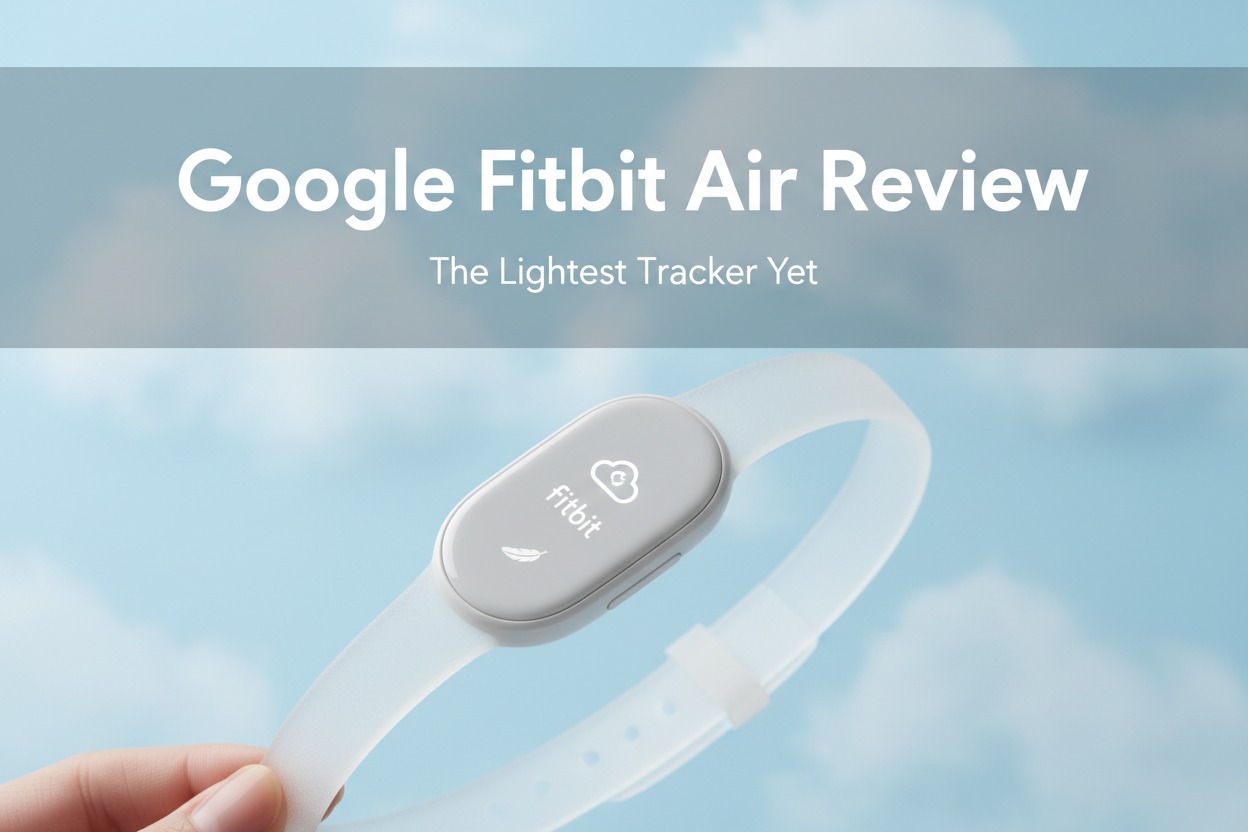
In an era where smartwatches are getting increasingly bulky, packed with ultra-bright displays and rugged titanium casings, Google is taking a sharp turn in the opposite direction. Enter the Google Fitbit Air, the brand’s lightest and most unobtrusive fitness tracker to date. Designed for users who want robust health insights without the physical burden of a miniature computer strapped to their wrist, the Fitbit Air promises to blend seamlessly into your daily life. But does stripping away the weight mean stripping away the features we have come to rely on?
Design and Comfort: Testing the Featherweight Feel
When you first slide the Google Fitbit Air out of its recycled packaging, your immediate reaction is likely to be disbelief. Weighing in at a mere fraction of a standard smartwatch, this tracker genuinely lives up to its "Air" moniker. Google has achieved this featherweight design by utilizing a high-grade polycarbonate chassis instead of aluminum, paired with an ultra-thin, breathable silicone band. On the wrist, the physical presence of the device quickly fades into the background, making it an absolute joy to wear during high-intensity workouts where heavier devices tend to bounce or chafe.
The true brilliance of this minimalist design shines brightest when you transition from daytime activities to sleep. For many, wearing a bulky smartwatch to bed is an uncomfortable chore that defeats the purpose of sleep tracking. The Fitbit Air, however, is so incredibly slim that you genuinely forget it is there, even when sleeping on your side or resting your head on your arm. The tapered edges of the sensor pod ensure it doesn’t snag on bedsheets or clothing, solving one of the most persistent complaints of modern wearable users.
Of course, achieving this level of comfort required some design compromises, most notably with the display. To keep the weight and thickness down, Google opted for a streamlined, energy-efficient PMOLED color display that is narrower than what you would find on the Charge series. While it is bright enough to read under direct sunlight, the limited screen real estate means text notifications can feel cramped, and navigating menus requires precise swipes. It is a trade-off that favors physical comfort over rich on-screen visual media, which will appeal greatly to minimalists but might disappoint those who prefer a more interactive screen.
Performance Review: Can This Tiny Tracker Keep Up?
With such a pint-sized footprint, the burning question is whether the Fitbit Air can deliver the robust health tracking Google is known for. Fortunately, the device does not skimp on the essentials. It features 24/7 heart rate monitoring, Google’s latest photoplethysmography (PPG) sensor array, and automated sleep staging. While it lacks built-in GPS—relying instead on your smartphone’s GPS connection for tracking outdoor runs—the step counting, active zone minutes, and cardio fitness scores proved remarkably accurate during our testing, matching the performance of much larger wearables.
Battery life is another area where the Fitbit Air defies its tiny dimensions. Normally, a smaller chassis dictates a smaller battery, but because the display is so highly optimized, the tracker easily stretches to a full six days of continuous use on a single charge. This impressive longevity means you rarely have to experience the anxiety of a dead battery mid-workout. When it does run low, the proprietary magnetic charging cradle juices the device back up to eighty percent in just under forty-five minutes, making it incredibly easy to maintain a consistent tracking routine.
On the software side, the Fitbit Air syncs effortlessly with the redesigned Fitbit app, leveraging Google’s machine learning algorithms to provide personalized health insights and daily readiness scores. However, power users should note that the "Air" experience is strictly focused on wellness; you won’t find advanced smartwatch features like NFC payments, music storage, or voice assistants here. It is a pure, distilled fitness tracker that prioritizes background monitoring over wrist-based productivity, proving that you don’t need a heavy, complex device to stay on top of your health goals.
Ultimately, the Google Fitbit Air is a masterclass in purposeful minimalism, carving out a unique niche in a crowded wearable market. By prioritizing comfort, weight reduction, and essential health metrics, Google has created a device that appeals to anyone tired of the bulky, notification-heavy smartwatches of today. While it may lack advanced features like onboard GPS and a large interactive display, it more than makes up for it with its week-long battery life and "barely-there" feel. If you are looking for a reliable, discreet companion to quietly monitor your wellness journey day and night, the Fitbit Air is undoubtedly the lightest and most comfortable way to do it.